Reviewing the Happy Easter Bunny Cross Stitch Pattern
As a designer who spends half my life squinting at pixel grids and the other half threading needles, I approach every new Happy Easter Bunny Cross Stitch Pattern with a mix of curiosity and skepticism. We have all been there: you download a cute graphic, excited to turn it into a best-selling item for your spring collection, only to realize the details are too dense for Aida cloth or the color palette clashes with standard thread charts. However, after spending time evaluating this specific design, I found it to be a refreshing departure from the overly complex or sterile options currently flooding the market.
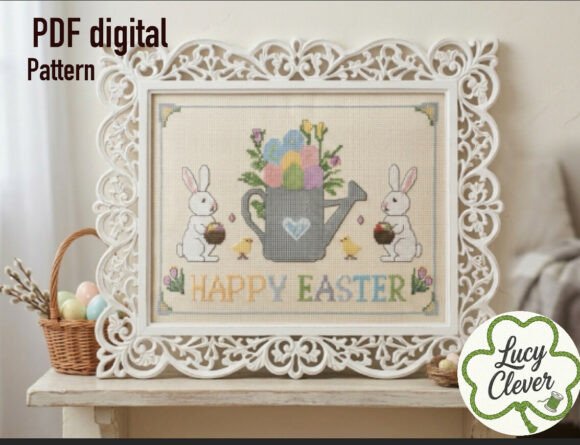
The first impression is one of genuine warmth. This is not just a generic rabbit icon; it is a composed scene featuring two bunnies, colorful eggs, chicks, and a spring watering can overflowing with flowers. For those of us in the craft business, mood is everything. This design captures the whimsical, soft energy of Easter without relying on clichéd, harsh outlines. It feels like a illustration from a children’s storybook, which immediately broadens its appeal beyond traditional holiday decor into the realm of nursery art and personalized baby gifts.
Real-World Application: From Screen to Fabric
To truly test the viability of any Graphics asset, I mentally place it on actual products. Imagine you are an Etsy seller preparing for the March rush. You need a design that works on multiple substrates. I visualized this pattern stitched onto a natural linen tote bag. The layout, with its central watering can and surrounding characters, offers a balanced weight that sits well on a square or rectangular canvas. Unlike designs that are too wide or too tall, this composition allows for negative space, which is crucial when working with textured fabrics like linen or heavy cotton canvas.
Consider also the potential for custom apparel. A pastel-colored sweatshirt embroidered with this motif would make a high-value item for a boutique shop. The key here is the clarity of the subjects. The bunnies and chicks are distinct enough to be recognized from a distance, yet they retain enough charm to invite closer inspection. For a handmade product, this dual-level engagement is vital. It catches the eye on a crowded craft fair table and holds interest when the customer picks it up.
Technical Considerations for the Stitcher
While the aesthetic is strong, we must discuss the technical execution. Since this is categorized under Cross Stitch Patterns, the primary medium is likely Aida fabric, as noted in the product details. However, many modern makers adapt cross-stitch motifs for machine embroidery or hand embroidery on non-evenweave fabrics. If you are adapting this embroidery project for a different technique, pay close attention to the small details.
The chicks and the flowers in the watering can are the critical points. In a real-world scenario, stitching these tiny elements on a dark fabric or a fabric with a loose weave can result in loss of definition. I strongly advise testing the design on scrap fabric first. If you are using this as a reference for a machine embroidery design, you will need to carefully adjust the stitch density. High density in such small areas can cause puckering, especially on stretchy fabrics like jersey knits used for baby clothes. Using a proper stabilizer is non-negotiable here to maintain the integrity of the finished product.
Furthermore, consider the thread colors. The description mentions "colorful eggs," which implies a varied palette. When sourcing threads, ensure you have enough contrast between the bunnies and the background. If you are stitching on white Aida, use a backstitch or a darker outline thread to define the shapes, otherwise, the white fur of the bunnies may disappear into the fabric. This is a common pitfall with light-colored subjects. A simple test in black and white mockups can reveal if your value contrast is sufficient before you commit to the full embroidery file execution.
Navigating Limitations and Fabric Choices
No design is universal, and honesty about limitations builds trust with your clients. This Happy Easter Bunny Cross Stitch Pattern thrives on flat, stable surfaces. It is ideal for pillow covers, kitchen towels, and framed art. However, I would exercise caution when applying it to curved surfaces like caps or hats. The horizontal spread of the watering can and the bunnies might distort if the hoop tension is not perfectly managed on a curved brim. Additionally, the intricate details of the flowers might get lost if the cap fabric is heavily textured or if the stitch count is reduced too aggressively to fit a small hoop size.
For those considering this for an applique design hybrid, note that the organic shapes of the eggs and flowers could be cut from felt or cotton scraps and then outlined with satin stitch or running stitch. This approach reduces stitch count and adds texture, making it suitable for items that need frequent washing, such as baby burp cloths or toddler t-shirts. It transforms the piece from a delicate decorative item into a durable personalized gift that can withstand real life.
Commercial Value and Brand Consistency
For small business owners and digital product sellers, the versatility of this design is its strongest asset. It fits seamlessly into a spring-themed collection. Whether you are selling the finished product or the digital embroidery file itself, the professional look of the composition elevates your brand. Customers associate clean, well-balanced designs with quality. A sloppy or cluttered design can undermine perceived value, but this pattern’s clear hierarchy of elements suggests professionalism.
When creating printable mockup assets for your online store, this design photographs beautifully. The distinct shapes allow for clear visibility even in thumbnail images on mobile devices. This is crucial for Etsy sellers where click-through rates depend on instant visual recognition. Use this design to create cohesive social media content, pairing it with props like fresh tulips, pastel ribbons, and wooden hoops to enhance the seasonal narrative.
Final Designer Notes
Before you launch this into your production line, there are a few housekeeping items to address. First, always confirm the licensing terms. Just because a pattern is available for purchase does not automatically grant commercial rights for mass production. Check whether the license allows for selling finished items or if it is restricted to personal use. This step is critical for maintaining ethical standards in the craft business community.
Second, verify the specific stitch count and recommended fabric count if not explicitly provided in the initial download. While the description mentions Aida, knowing whether it is optimized for 14-count or 18-count Aida will save you hours of frustration. A design intended for 18-count may look disproportionately large on 14-count, altering the final dimensions of your tote bag design or sweatshirt embroidery.
In conclusion, the Happy Easter Bunny Cross Stitch Pattern is a robust, charming addition to any designer’s library. It balances whimsy with structural clarity, making it suitable for a wide range of applications from holiday embroidery decor to commercial embroidery merchandise. By respecting the technical constraints of your chosen fabric and method, you can transform this digital asset into a tangible product that delights customers and strengthens your brand’s reputation for quality and taste.